_edited.png)

Microsoft AIO Playbook Released for Retailers — What It Means and How to Respond
Microsoft has released a formal AI Optimization playbook specifically for retailers — a significant development that signals both the maturation of AI search optimization as a discipline and the growing importance of the Microsoft AI ecosystem for retail and e-commerce brands. The playbook provides retailers with Microsoft's own guidance on how to optimize their content and technical setup for Bing AI features, Copilot shopping integrations, and the broader Microsoft AI-powered discovery surface. This post unpacks what the playbook covers, what it means for retailers specifically, and how to incorporate its guidance into your broader AI visibility strategy using Semrush.
Disclosure: This post contains affiliate links. If you purchase through our links, we may earn a commission at no additional cost to you. We only recommend tools we genuinely believe in.
Why Microsoft Released a Retail-Specific AIO Playbook
The release of a retail-specific AI Optimization playbook from Microsoft reflects a deliberate strategy to position the Microsoft AI ecosystem as a significant retail discovery channel. Microsoft has invested heavily in AI-powered shopping features — Copilot can now assist users in product research, comparison, and purchase decisions across Microsoft's surfaces — and the company wants retailers to optimize for these features in the same way they optimize for traditional search.
The retail vertical was a logical first focus for a formal playbook because retail brands have clear, measurable conversion goals that make AI optimization ROI quantifiable, and because the purchase journey for retail products — research, comparison, decision, purchase — is well-suited to AI-assisted discovery. A user asking Copilot to help them find the best laptop for video editing, compare running shoe options within a budget, or identify the most sustainable clothing brands is a high-intent retail discovery session that the right optimization can capture.
For retailers, the playbook signals that Microsoft is serious about AI-powered retail discovery and that the brands that optimize for it early will have a first-mover advantage in a channel that is still relatively uncrowded compared to Google Shopping optimization.
Key Elements of the Microsoft AIO Retail Playbook
Product data quality and structured markup
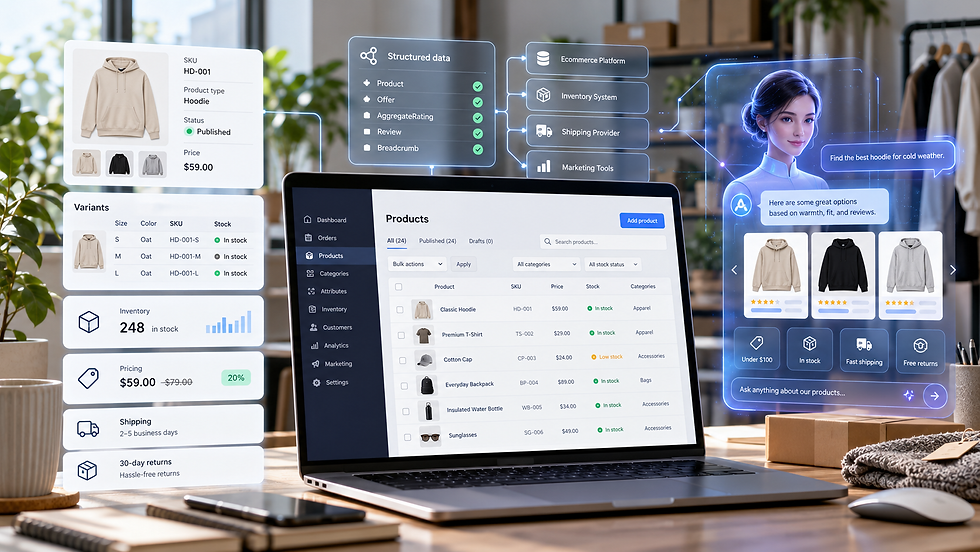
The playbook emphasizes product data quality as a foundational requirement for AI-powered retail visibility. This includes comprehensive product schema markup with accurate attributes — name, description, price, availability, images, reviews, and specifications — as well as keeping product data current and consistent across all Microsoft surfaces. Outdated or inaccurate product data is flagged as one of the primary barriers to AI feature eligibility.
The emphasis on structured data quality is consistent with the broader AI visibility principle that AI systems extract and use structured information more reliably than unstructured content. Retailers with comprehensive, accurate product schema are better positioned for AI-generated product recommendations, comparison features, and shopping assistance responses. This is also why retail teams should treat AI visibility as a technical SEO priority, not only a content initiative. For a deeper look at the skills required to make content accessible, parseable, and citable by AI platforms, see this guide on AI technical SEO skills.
Merchant Center and Bing integration
The playbook strongly recommends active Bing Merchant Center participation as a prerequisite for AI-powered shopping feature visibility. Retailers that have connected their product feeds to Bing Merchant Center and keep those feeds current and error-free are eligible for a broader range of AI-powered shopping surfaces than retailers relying solely on organic crawling.
For retailers already using Google Merchant Center, extending product feed submission to Bing Merchant Center is typically a straightforward integration — most feed management platforms support both simultaneously. The incremental effort is modest relative to the AI visibility opportunity it unlocks across the Microsoft ecosystem. Retailers that want to strengthen this foundation should also revisit broader Bing SEO best practices, since traditional Bing optimization signals — including structured data, content quality, crawlability, and user engagement — still support how brands appear across Microsoft’s evolving search and AI-powered discovery surfaces.
Review and social proof integration
The playbook emphasizes the importance of review data in AI-powered retail recommendations. AI-assisted shopping features heavily weight product and merchant reviews when making recommendations — users asking Copilot for the best option in a category receive recommendations that incorporate review sentiment, not just product attributes. Retailers with strong, well-structured review data integrated into their product schema are better positioned for AI recommendation inclusion.
Conversational content optimization
The playbook specifically addresses conversational content optimization — structuring product and category content to respond to the natural language questions buyers ask AI assistants during their purchase research. This includes FAQ content on product pages that addresses common pre-purchase questions, comparison content that directly addresses how-does-this-compare queries, and buying guide content structured to answer the broad research questions buyers ask at the start of their consideration journey.
This conversational content guidance aligns with the prompt research principle we have discussed throughout this campaign — understanding the actual language buyers use when asking AI platforms for purchase guidance and building content that directly addresses those prompts.
How This Applies Beyond Retail
While the Microsoft playbook is retail-specific, its core principles apply broadly to any brand optimizing for AI-powered discovery. The emphasis on structured data quality, first-party data integration with platform tools, review signal strength, and conversational content optimization are all principles that translate directly to non-retail categories.
For professional services, B2B software, and other non-retail brands, the equivalent of Merchant Center integration is ensuring your brand and service data is accurately and comprehensively represented in the Microsoft/Bing knowledge graph — through Bing Places for Business, comprehensive organization schema markup, and accurate business information across Microsoft's data sources.
This is also where a CRM platform like HubSpot can support a broader AI visibility strategy. By centralizing customer data, lead sources, lifecycle stages, and content engagement insights, HubSpot helps businesses better understand the questions prospects are asking, the pages that influence conversions, and the customer segments most likely to engage. That first-party insight can then inform more useful FAQ content, comparison pages, service descriptions, and buying guides — the same types of structured, intent-driven content AI systems increasingly rely on when making recommendations.
Integrating Microsoft AIO Guidance With Your Semrush Strategy
The Microsoft AIO playbook focuses on Microsoft-specific optimization requirements, while Semrush's AI Visibility Toolkit provides the cross-platform visibility monitoring that contextualizes your Microsoft performance within the broader AI search landscape. Using both together gives you platform-specific optimization guidance from Microsoft alongside competitive benchmarking, prompt research, and cross-platform citation tracking from Semrush.
The practical workflow is to implement the Microsoft playbook recommendations for your product or service content and then track the impact on your overall AI Visibility Score over the following four to six weeks. Improvements in Bing AI citation frequency following playbook implementation will be visible in your cross-platform visibility data — confirming which specific optimizations produced the most measurable impact.
For retailers specifically, combining Microsoft playbook implementation with Semrush's SEO Toolkit's competitive research capabilities — identifying which competitors are most visible across AI shopping features and what content and technical characteristics their highest-performing pages share — provides the complete picture needed for a comprehensive AI retail visibility strategy.
People Also Ask
Is the Microsoft AIO playbook publicly available?
Microsoft has been distributing AIO guidance through its partner and advertiser channels, its webmaster documentation, and at marketing industry events. The most comprehensive access to current Microsoft AI optimization guidance is through Bing Webmaster Tools documentation and the Microsoft Advertising partner resources portal. For retailers specifically, Bing Merchant Center documentation includes current AI feature eligibility requirements that align with the playbook guidance.
How important is Bing AI optimization compared to Google AI optimization for retailers?
For most retailers, Google AI features currently reach a larger audience than Bing AI features due to Google's greater search market share. However, the incremental effort required to optimize for both is modest when the foundational optimization work — structured data, content quality, review integration — benefits both platforms simultaneously. For retailers targeting enterprise buyers, professional demographics, or users in markets where Microsoft's market share is higher, Bing AI optimization warrants proportionally more investment.
How does Microsoft's AI shopping experience differ from Google Shopping?
Google Shopping is primarily a product listing and paid advertising platform where products appear in search results based on feed data and bidding. Microsoft's AI-powered shopping experience through Copilot is more conversational — users engage in multi-turn research sessions where Copilot actively assists in narrowing options, making comparisons, and guiding purchase decisions. The optimization requirements differ: Google Shopping optimization focuses heavily on feed data quality and bidding strategy, while Microsoft AI shopping optimization focuses on conversational content, review data integration, and structured product information that AI can use in synthesized responses.
Final Thoughts
The Microsoft AIO Retail Playbook is a signal worth paying attention to — not just for what it contains, but for what its release represents. Major platforms are beginning to formalize AI optimization guidance in the same way they once formalized SEO guidance, marking a maturation of AI search optimization as a discipline that every serious digital marketing team needs to treat as a strategic priority.
For retailers, implementing the playbook's recommendations now — structured data quality, Merchant Center integration, review data optimization, conversational content — positions your brand for the AI-powered retail discovery opportunity that is growing on the Microsoft platform. For non-retail brands, the principles translate directly. The specifics differ by category, but the strategic direction is consistent: invest in the structured, authoritative, well-validated content and data that AI systems use to make recommendations, and invest in it before your competitors do.
Ready to get started? Build your AI retail visibility strategy with Semrush | Try Semrush free today


Comments